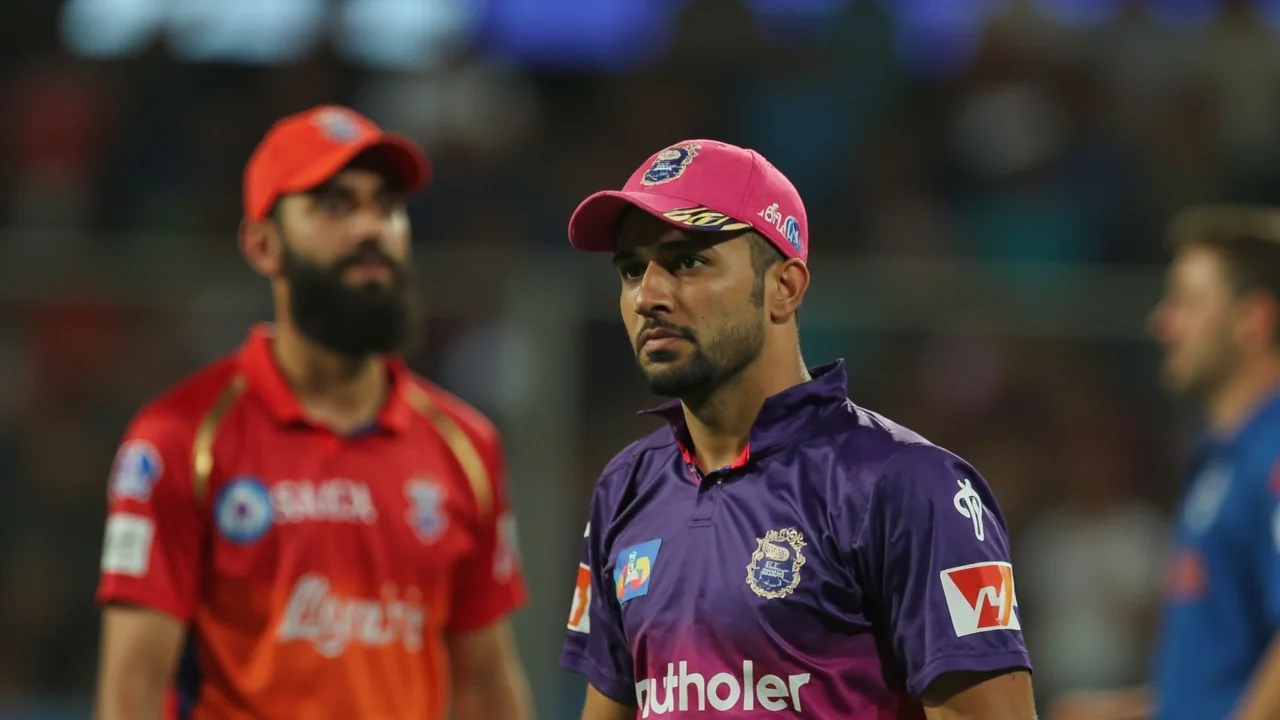
IPL 2026 Points Table After RCB vs KKR: Kohli’s 105 Sends Bengaluru Top
Royal Challengers Bengaluru moved to the top of the IPL 2026 points table after beating Kolkata Knight Riders by six wickets in Match 57 at New Raipur on 13 May 2026. Virat Kohli’s unbeaten 105 from 58 balls carried the chase of 193 and pushed RCB level with Gujarat Titans on 16 points, ahead on net run rate.
The result also tightened three connected races: the top-four contest, the Orange Cap standings and the Purple Cap standings. Read in its original date context, Match 57 was not merely a high-scoring chase; it was the evening on which Bengaluru gained first place, Kohli climbed to third among the run-scorers and Bhuvneshwar Kumar retained the wicket-taking lead.
RCB chased 193 after a delayed start
Rain held up the start by one hour and fifteen minutes, although the full allocation of 20 overs per side remained intact. RCB captain Rajat Patidar won the toss and chose to field. Bengaluru made two changes: Venkatesh Iyer replaced Romario Shepherd, while Jacob Duffy came in for Suyash Sharma. Kolkata were forced into one alteration, with debutant Saurabh Dubey replacing the unavailable Varun Chakravarthy.
KKR reached 192 for four. Finn Allen gave the innings early pace with 18 from eight balls before Bhuvneshwar Kumar removed him. Ajinkya Rahane made 19, and Cameron Green contributed 32 in a 68-run partnership with Angkrish Raghuvanshi. Green’s anchoring role allowed Raghuvanshi to reach fifty from 32 deliveries and keep Kolkata moving through the middle overs.
Raghuvanshi then added 76 with Rinku Singh. Rinku struck 49 from 29 balls, while Raghuvanshi finished with 71 and was run out from the final ball of the innings. The 192 total gave KKR a defendable score, but not enough separation from an RCB batting order that found 66 runs for one wicket in the powerplay.
Jacob Bethell made 15 before Kartik Tyagi dismissed him with a bouncer. Devdutt Padikkal then scored 39 alongside Kohli, who reached fifty from 32 balls and helped bring up the team hundred in the tenth over. Tyagi broke that stand, yet Kohli stayed to the finish. His unbeaten century came after two consecutive ducks, making the innings both a personal response and the decisive contribution in a chase completed with six wickets in hand.
RCB led Gujarat Titans on net run rate
Both RCB and Gujarat Titans had eight wins from 12 matches and 16 points. Bengaluru’s net run rate of +1.053 placed them first, comfortably above Gujarat’s +0.551. Sunrisers Hyderabad occupied third with seven wins, five losses and 14 points from 12 matches.
Played 12, won eight, lost four, net run rate +1.053.
Played 12, won eight, lost four, net run rate +0.551.
Played 12, won seven, lost five, net run rate +0.331.
Punjab Kings held fourth, followed by Chennai Super Kings in fifth and Rajasthan Royals in sixth. Delhi Capitals were seventh. KKR’s defeat left them eighth after 11 matches, with four wins, six losses, one no-result-equivalent point in the record, nine points overall and a net run rate of -0.198. Mumbai Indians were ninth and Lucknow Super Giants tenth.
The table separated into clear pressure zones. RCB and GT controlled the top with 16 points, while SRH sat two points back. Punjab’s fourth-place position carried immediate value because every side below them still needed results to create movement. Kolkata’s situation was more severe: the defeat did not mathematically erase their chances, but ninth points after 11 matches left little room for another loss.
For a standings reader, net run rate was the decisive detail at the summit. A simple win-loss comparison could not split Bengaluru and Gujarat. RCB’s +1.053 gave them a margin of 0.502 over GT, reflecting the cumulative strength of their results rather than only the six-wicket victory at New Raipur. The complete order and the site’s latest weekly rankings remain available in the IPL fantasy cricket leaderboard.
Klaasen led, with Kohli now third
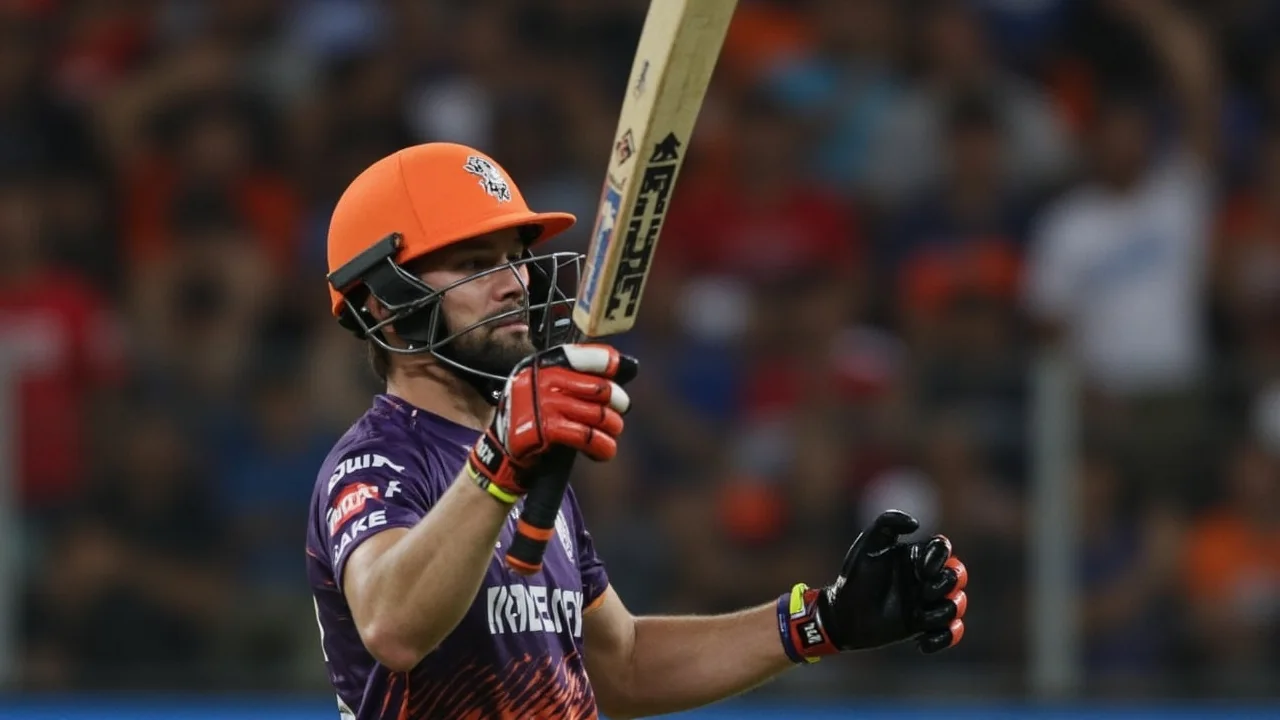
Heinrich Klaasen remained the leading run-scorer with 508 runs for Sunrisers Hyderabad. Gujarat Titans batter Sai Sudharsan followed on 501, a gap of only seven runs. Kohli’s 105 lifted him to 484 and third place, moving him into direct contact with the top two rather than leaving his century as an isolated match achievement.
Abhishek Sharma stood fourth with 481 runs, only three behind Kohli, while KL Rahul had 477 for Delhi Capitals. The top five were therefore covered by 31 runs. That compact spread meant one substantial innings could reorder most of the list, and Kohli’s climb demonstrated exactly how quickly the leading group could change.
The innings also mattered because of its shape. Kohli did not simply add a century to his season tally; he remained unbeaten in a chase of 193 and absorbed the innings after Bethell and Padikkal departed. The 58-ball hundred converted a recent sequence of two ducks into the performance that took his team to first and himself to third.
Purple Cap: Bhuvneshwar held a one-wicket edge
Bhuvneshwar Kumar led the wicket chart with 22 for RCB. Kagiso Rabada was second with 21 for Gujarat Titans, while Chennai Super Kings bowler Anshul Kamboj held third on 19. Rashid Khan and Lucknow’s Prince Yadav were level on 16 wickets.
Bhuvneshwar’s dismissal of Allen was therefore significant on two levels. It interrupted KKR’s quick start and added the wicket that kept him ahead of Rabada. Unlike the Orange Cap’s 31-run spread across five players, the Purple Cap picture had a more visible break after the top three: three wickets separated Kamboj from the pair on 16.
A single scoreline connected all three leaderboards
RCB’s six-wicket win altered the team standings and both individual races at once. Kohli supplied the unbeaten 105 that completed the chase and moved him to 484 runs. Bhuvneshwar removed the fast-starting Allen and remained the competition’s leading wicket-taker. Bengaluru’s eighth win then placed them above Gujarat on net run rate.
KKR’s batting offered strong individual returns without producing the result. Raghuvanshi’s 71 was the innings’ largest contribution, Rinku’s 49 from 29 balls accelerated the final phase, and Green’s 32 helped construct the middle-overs platform. Yet a total of 192 for four became vulnerable once RCB passed 66 in the powerplay and Kohli established control of the required rate.
The historical importance of the table lies in its timestamp. These were the standings immediately after Match 57 on 13 May 2026, not a claim about the final season order. They capture a late league-stage moment when RCB had first place on net run rate, KKR were eighth on nine points, Klaasen led the batting chart by seven runs and Bhuvneshwar led the bowling chart by one wicket.
That narrowness is the useful legacy of the match. First place depended on net run rate, the Orange Cap top five sat within 31 runs, and the Purple Cap lead was a single wicket. Kohli’s century supplied the largest performance of the night, but its meaning came from how many standings it changed at the same time.
How to read the table in its proper historical frame
A points table records a competition at a precise stopping point. After Match 57, RCB and GT had identical records of eight wins and four losses, so the ranking required net run rate as the separator. SRH’s 14 points placed them one victory behind the leaders. The teams from fourth to seventh occupied the contested middle, while KKR’s nine points left them chasing rather than controlling a qualifying place.
The individual lists require the same care. Klaasen’s 508 was the Orange Cap benchmark at that moment, not a declaration of the final winner. Sudharsan trailed by seven; Kohli’s century brought him within 24; Abhishek sat three behind Kohli; Rahul followed four runs later. The value of those numbers is the closeness they show. A single innings on the scale of Kohli’s 105 could move a batter through several positions.
The bowling race was similarly unsettled. Bhuvneshwar’s 22 gave him the lead, but Rabada’s 21 kept the difference to one wicket. Kamboj remained close enough on 19 to challenge with one strong spell. Rashid and Prince Yadav, both on 16, needed a larger return to close the gap, yet neither was outside the leading group while league matches remained.
Match context also matters when reading KKR’s 192. Four wickets lost suggests control, and three substantial partnerships supported that impression. RCB nevertheless chased the target because Kohli turned a demanding required rate into a stable pursuit. The scorecard therefore illustrates why standings move on results rather than the apparent quality of one innings: Kolkata constructed a competitive total, but Bengaluru produced the more complete chase.
For retrospective comparison, the most revealing line remains RCB’s net run rate. Their advantage over GT was large enough to make first place clear despite equal points, while KKR’s negative figure reinforced the pressure created by their win-loss record. Match 57 froze those contrasts in one table: two equal leaders separated by margin, one close challenger on 14 points and an eighth-placed former champion facing a narrow route upward.
Verified match ledger
Match: IPL 2026 Match 57, RCB vs KKR. Venue and date: New Raipur, 13 May 2026. Result: RCB won by six wickets. KKR: 192/4 in 20 overs. RCB: chased the target, led by Kohli’s unbeaten 105 from 58 balls. Source: CricketAddictor, published 13 May 2026 and updated 14 May 2026.